
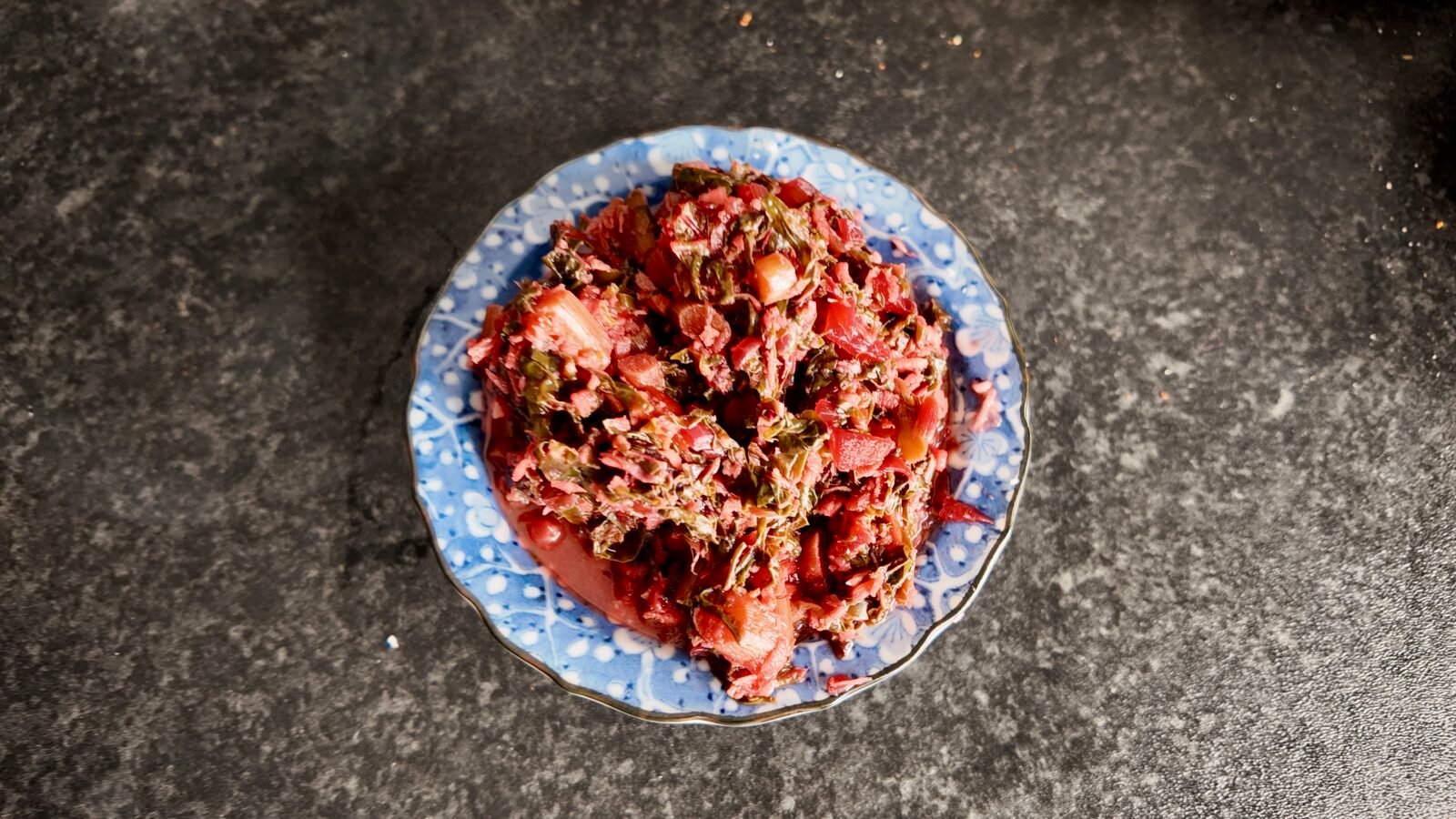
Red Amaranth or Tambdi Bhaji, as I fondly call it in Konkani, just like many other Goans do, is one of my most loved, favourite Goan recipes of all time.
I was so happy to find it at the local Indian grocery store here in London the other day.
Health Benefits of eating Tambdi Bhaji
Red Amaranth leaves are nutrient-dense leaves which are rich in vitamin A, C and K, folate, iron, calcium, and fibre. Besides boosting your immune system, this leafy vegetable can help strengthen bones, improve digestion, and support healthy red blood cell production.
This veg has a high level of calcium, magnesium and phosphorus, which helps maintain bone density and skeletal strength. Being rich in dietary fibre, this veg promotes regular bowel movements and supports healthy gut bacteria. Vitamin A and C in it help protect cells, enhance white blood cell production, and defend the body against infections. Abundant iron and folate aid in haemoglobin production, helping fight fatigue and prevent anaemia. Vivid red pigments in the vegetable called betalains and vitamin C in it reduce oxidative stress and lower chronic inflammation.

Uses of this Leafy Veg, Red Amaranth
This leafy veg can be added to lentils, stir-fries, or even soups. It is a very versatile ingredient and is found in many cuisines around the world. It is grown in tropical, subtropical and temperate regions and is historically rooted in the Americas but is a staple leafy vegetable eaten across parts of Asia and Africa. Besides, in the Indian diet, you’ll find this veg eaten across Bangladesh, Nepal, China, Vietnam, Nigeria, Kenya, South Africa, Zimbabwe, Mexico, Peru, Guatemala, Jamaica, and the Caribbean.
Red Amaranth eaten in different countries
Apparently, in India alone, it is used in the North of India in sweet kheers, which is like a comforting porridge or a dessert of some kind; in central India, it is cooked as Lal Bhaji; and in the Southern and Western parts of India, including Goa, we cook and eat it with freshly grated coconut like this recipe. In Goa, we also make another recipe called Tonak with these leaves and green gram called Vatana.
In China and Vietnam, this leafy vegetable is grown by millions of farmers, and people even grow it in their home gardens. The tender leaves are then tossed into stir-fries, hot pots and quick garlic broths.
In Bangladesh and Nepal, this veg is grown in summer and eaten frequently with rice. Then in Africa, it is included in stews. And in Mexico, these leaves are used to make a sweet confectionery called algería.
In the Caribbean, which includes Jamaica, Trinidad, etc., these leaves are used to make Callaloo, a famous, highly seasoned green soup or side dish. Then, in South America, in the Andean Region, it is cultivated across Peru, Bolivia and Ecuador and is locally called kiwicha.
Even in Greece, it is eaten as a fresh salad and is called Vlita. It is also braised and sautéed, eaten as an accompaniment to fish and seafood.
Ingredients used in this recipe
A bunch of Red Amaranth leaves, freshly grated coconut; I used frozen fresh grated coconut as that was what was available here. Red onion, tomato, green chilli, garlic, salt, vegetable oil, and a little water to cook it, as the leaves have a higher water content, which, when wilted, releases more water.
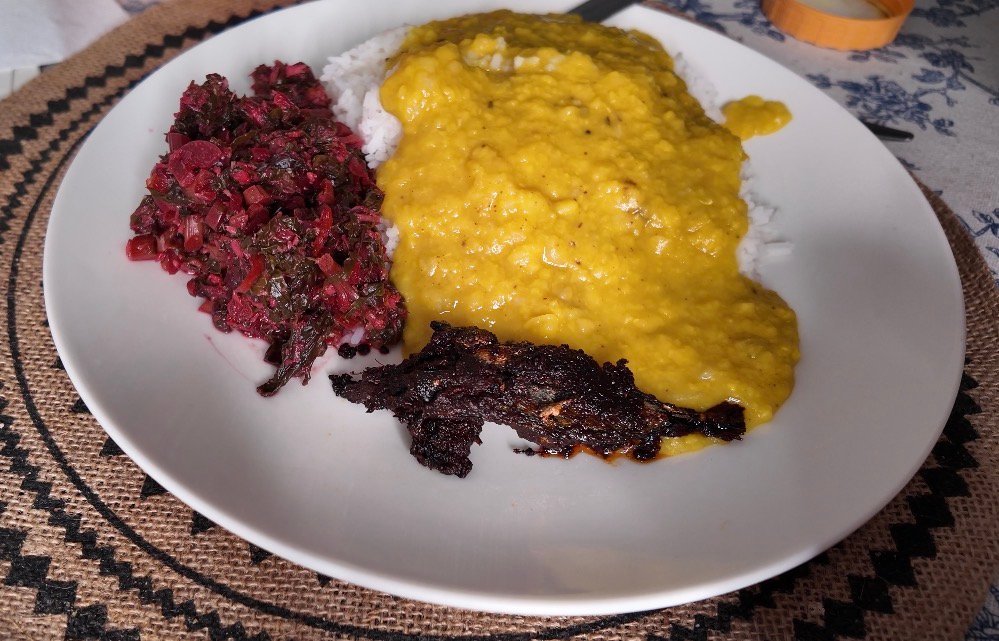
This is a very quick and easy recipe. It can be paired as a side dish with some simple dal, rice and mackerel para. That’s how we enjoyed it on that particular day.
The Recipe
 AuthorVania CottaCategory30 MINUTES OR LESS, APPETIZERS/SIDES, BROWSE RECIPES, BY COURSE, BY CRAVINGS, BY CUISINE, BY DIET, BY HOLIDAY/SEASON, BY SKILL/TIME, DAIRY-FREE, EASY, FAVOURITES, FOOD SERIES, FRESH INGREDIENTS, FRUIT AND VEG GUIDES, GLUTEN-FREE, GOAN, HEALTHY, LUNCH/DINNER, NOSTALGIC, RECIPE INDEX, RECIPE ROUND-UPS, RECIPES, SAVOURY, SWEET, VEGETARIANCuisineGOANCooking MethodBOILING, COOKING, SAUTEEINGDifficultyBeginner
This is a very simple Goan-style preparation of Tambdi Bhaji or Red Amaranth leaves. Generally eaten as a side dish for lunch or dinner.
Wash the red amaranth leaves properly, as they can have mud in them. Finely chop them and set aside.
Finely chop a small red onion, half a tomato and 3 cloves of garlic. Slit one fresh green chilli. Set all aside.
Prep some freshly grated coconut and set aside to use later.
In a small saucepan, add a tbsp of oil; next, add the garlic and chilli and sauté well for some time.
Now add the onions, followed by the tomatoes and sauté them until softened.
Finally, add the chopped red amaranth leaves and a little water. Leave it partially covered with the lid on to cook.
Once the water is completely dry or very little, simply add the freshly grated coconut and cook for a few more minutes until done. You can watch the full recipe here.
This simple preparation goes very well with hot chapatis or rice, dal, mango pickle or mackerel para, just like we ate it.
- You can make this recipe simply with grated coconut, a little onion, garlic and green chilli.
- You can add a little bit of tomato, onion, garlic, green chilli and coconut.
- This veg can be added to other recipes like dal, green gram, soups, stir-fries, and stews.
Ingredients
Loved this Recipe?
Sometimes, all I need is a bowlful of this simple Goan-style red amaranth vegetable or Tambdi Bhaji. Just this, some simple dal tadka, rice with some mango pickle or mackerel para. If you like this recipe, go on and tell your friends about it. Let them know so they can experience this leafy vegetable too. Share it with your family so they can enjoy it too.
Don’t forget to save this recipe for your next simple dinner. Tag @trulysoulfully on Instagram when you make it using the hashtag #trulysoulfully. I’d love to see your delicious creations!
For more authentic Goan and coastal recipes, subscribe to my newsletter and never miss the taste of home.
Discover more from Truly Soulfully Eats
Subscribe to get the latest posts sent to your email.